
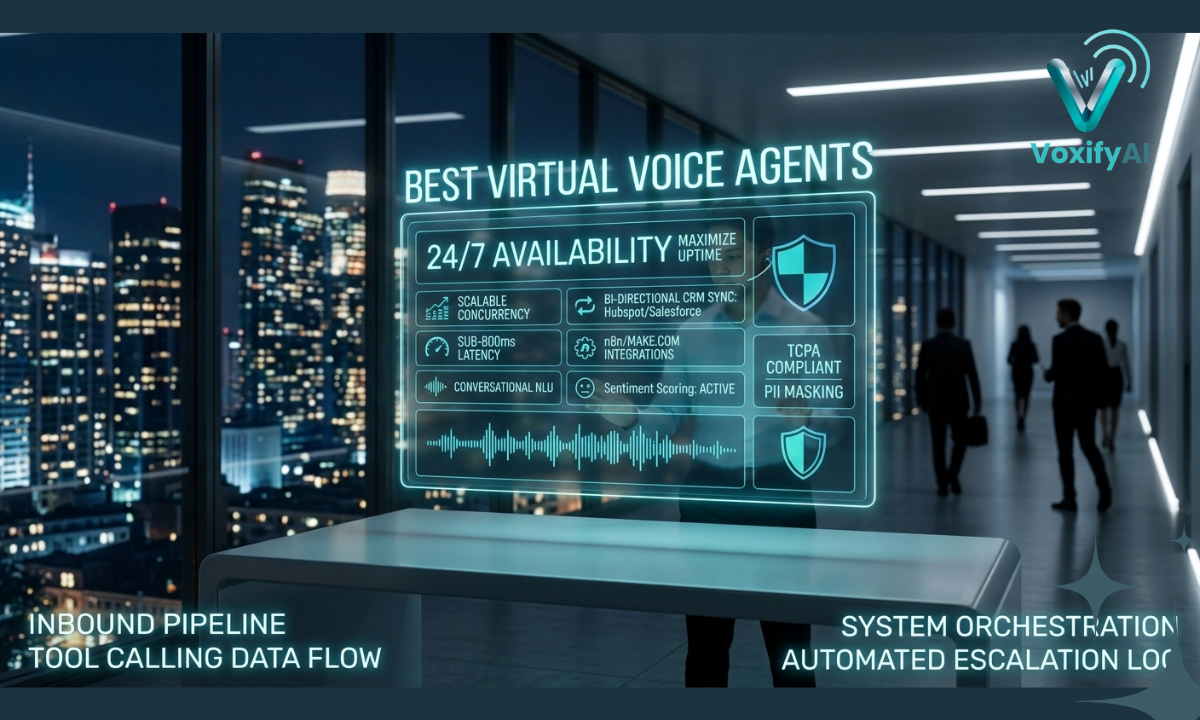
Achieving flawless 24/7 customer service requires moving past restrictive human shift schedules and mechanical touch-tone menus. The best virtual voice agents for 24/7 availability utilize highly responsive neural orchestration layers (such as Retell AI or LuMay Voice Agent) combined with custom API glue to instantly pick up inbound traffic, process data, and execute live CRM actions at 3 AM with the exact same fidelity as 3 PM.
The Hidden Cost of the “Closed” Sign
For modern businesses operating across global time zones or handling high-velocity consumer inquiries, availability isn’t a perk—it is a baseline survival metric. When a customer dials your support number at midnight with an urgent billing discrepancy or an emergency service request, they expect an immediate pathway to resolution.
Traditional call center configurations attempt to patch this reality using two methods:
- Expensive After-Hours Shifts: Paying high night-differential wages to human staff who spend half their time waiting for sparse calls, or outsourcing to cheap international centers that often degrade the brand’s quality of care.
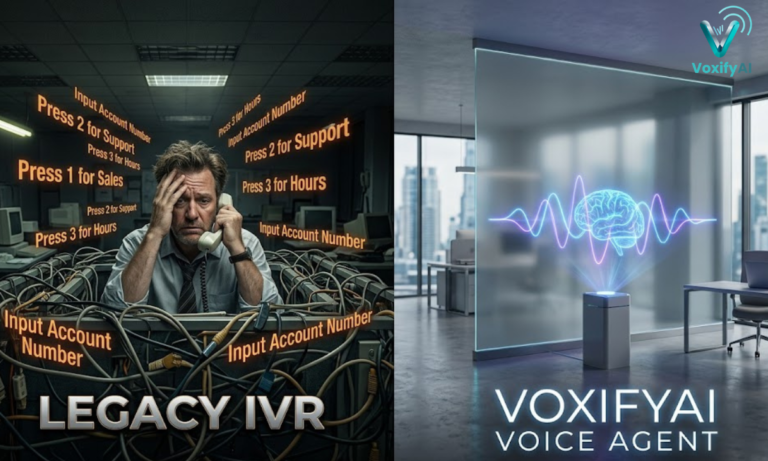
- Legacy Interactive Voice Response (IVR) Trees: Forcing the caller to sit through endless “Press 1 for tracking, Press 2 for billing” loops, only to end up in an unmonitored voicemail inbox.
This administrative friction creates immediate patient or client leakage. Utilizing the best virtual voice agents for 24/7 availability allows businesses to permanently close this coverage gap, dropping operating costs by 60% to 80% while answering 100% of incoming volume with zero wait time.
What Defines the Best “Always-On” Voice Agents?
True 24/7 voice automation goes beyond reading text from a static script. An enterprise-grade virtual agent requires a deep computing architecture engineered around three technical pillars:
1. Zero-Queue Elastic Scaling
When call volume spikes unexpectedly—whether due to a sudden product recall, a holiday rush, or an after-hours regional power outage—human infrastructure breaks. Callers hit hold queues.
Top-tier virtual platforms (such as Retell AI and Bland AI) provide massive, elastic concurrency. They can process 500+ calls simultaneously on a single phone line, ensuring that every customer receives an instantaneous, dedicated pickup at the exact second they dial.
2. Conversational Fluidity and Sub-800ms Latency
If an automated system takes over a second to reply to a customer’s statement, the illusion of a natural interaction breaks down. The best platforms achieve sub-800ms round-trip latency by unifying lightning-fast streaming Speech-to-Text (STT), high-speed LLM processing cores, and hyper-realistic Text-to-Speech (TTS) models.
Furthermore, these engines utilize advanced turn-taking and barge-in management. If a customer cuts off the agent mid-sentence to clarify an order number, the agent stops speaking immediately, processes the interruption seamlessly, and adapts its path without resetting the call flow.
3. Bi-Directional System Orchestration (Tool Calling)
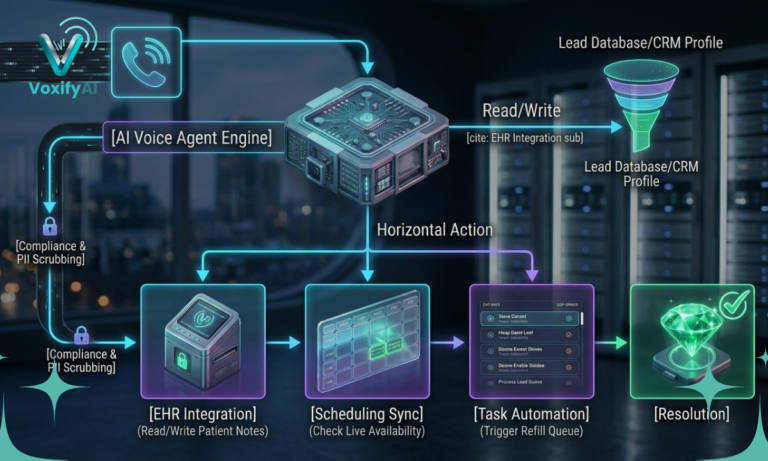
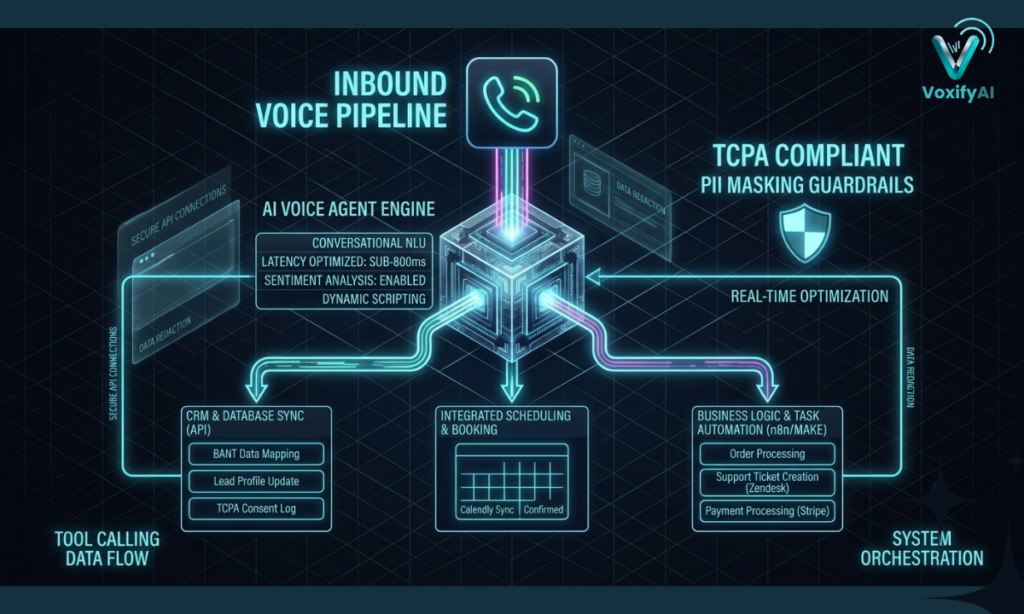
An isolated voice agent can only answer basic FAQs. The most effective virtual receptionists are integrated directly into your operations stack via APIs and visual workflow automation tools like n8n or Make.com.
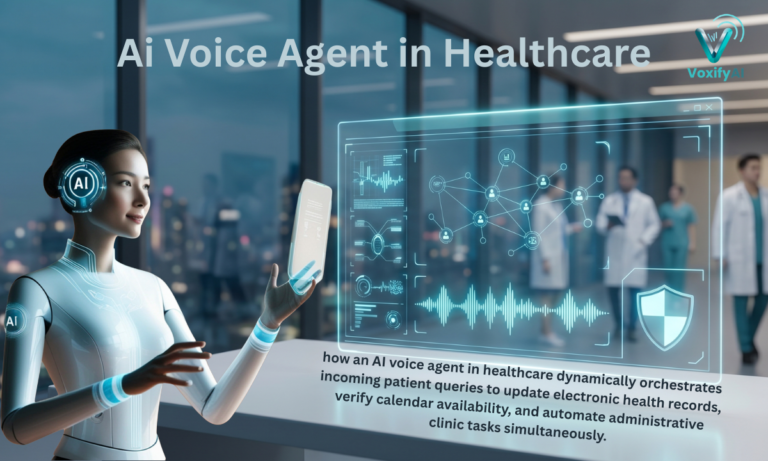
During a live, midnight call, the agent can call custom backend functions to autonomously look up an order status in Shopify, modify a booking in Calendly, process a secure payment via Stripe, or update custom fields inside your CRM (HubSpot, Salesforce, GoHighLevel).
Technical Performance Breakdown of Top Market Leaders
| Platform Core | Primary Strength | Best Architectural Case | Typical Runtime Cost |
| Retell AI | Industry-leading low latency (~600ms) and highly advanced turn-taking model. | Complex multi-turn verification, CRM field mapping, and secure account lookups. | ~$0.07 / minute base |
| LuMay Voice Agent | Telephony-first routing with sub-500ms computing loops and built-in sentiment grading. | High-volume enterprise inbound queues requiring deep database writing. | ~$0.05 / minute base |
| ElevenLabs (ElevenAgents) | Unmatched emotional voice synthesis and cross-language accent mapping. | Global consumer support requiring dynamic, multilingual switching. | Custom / Dynamic |
4. Designing the Perfect 24/7 Escalation and Guardrail Logic
Deploying an autonomous agent doesn’t mean completely abandoning the human touch. The gold standard for after-hours operations is a Deterministic Fallback Matrix.
When building call logic, engineers design strict constraints for edge cases:
- The Warm Hand-Off: If a call scales in complexity or features a high-value customer with an emotional dispute, the agent triggers a live transfer. During regular business hours, it sends the call to a human specialist alongside a pre-populated JSON transcript summary so the customer never has to repeat themselves.
- After-Hours Ticketing: If the system handles a complex crisis at 2 AM when no live staff is available, it gracefully sets expectations, dynamically captures the customer’s intent, compiles an itemized summary, and creates an automated high-priority ticket inside Zendesk or Jira for immediate morning dispatch.
Security and Compliance on the Night Shift
Because automated systems handle private customer details around the clock, they must adhere to the exact same regulatory guardrails as human operators.
The underlying framework must feature SOC 2 Type II compliance, strict data isolation, and GDPR/HIPAA readiness. Additionally, look for platforms that allow user-defined PII Redaction. This safety net automatically scrubs sensitive data strings (like credit card numbers, social security keys, or personal health details) from written text logs and permanent storage servers before they reach your historical database.
Frequently Asked Questions (FAQ)
Can a virtual voice agent handle regional accents or noisy backgrounds?
Yes. Next-generation acoustic processing models utilize advanced audio filters to completely isolate background noise (such as driving sounds or restaurant chatter). Furthermore, neural speech-to-text models are trained across thousands of diverse regional dialects and international accents to accurately map consumer intent without requiring structural repetition.
What is the setup time required to launch a 24/7 automated phone line?
While basic template-driven setups can be tested within minutes, an enterprise-ready production agent typically takes between 2 to 4 weeks to fully deploy. This window allows development teams to thoroughly map out conversational scripts, establish secure API webhooks to your database, and run extensive diagnostic test calls to ensure structural reliability.
How much do 24/7 AI voice agents cost compared to traditional answering services?
Traditional legacy human answering services charge flat monthly base rates alongside steep per-call or per-agent seat fees. In contrast, modern virtual agents run entirely on consumption-based pricing models, typically ranging between $0.10 and $0.25 per active call minute (inclusive of telephony costs, LLM processing, and premium voice synthesis). This consumption structure saves businesses up to 80% on overhead while eliminating human scheduling restrictions entirely.
Capture Every Call, Across Every Time Zone
Leaving your communication lines unmonitored during off-hours means sacrificing revenue, market authority, and customer retention. By implementing a highly optimized, low-latency virtual agent layer, your business ensures a seamless, instantly responsive experience for every single customer—no matter when they reach out.
[Schedule a Systems Architecture Review with VoxifyAI] and listen to a live, customized conversational agent built specifically to secure your after-hours revenue.