
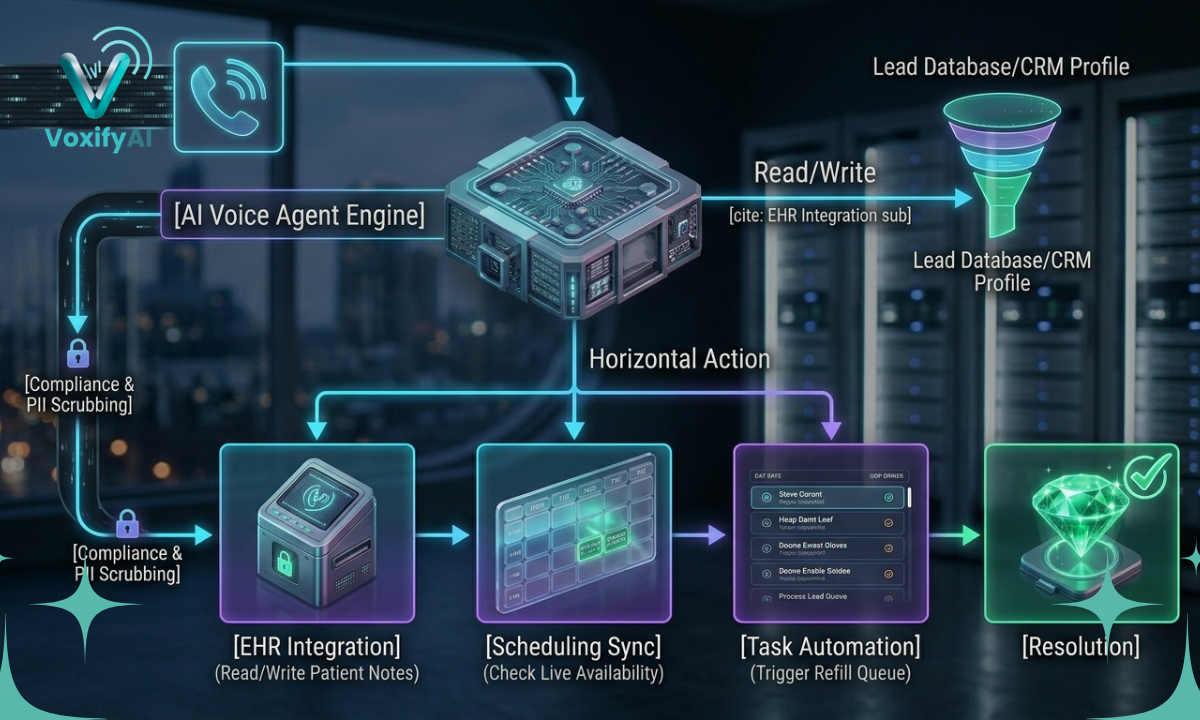
The most effective AI voice agent for cold calling isn’t a rigid standalone software tool, but an enterprise-grade conversational engine (like RetellAI or Bland AI) orchestrated via programmable webhook pipelines (such as n8n). To successfully convert cold prospects in 2026, outbound systems must achieve sub-800ms response latencies, run SHAKEN/STIR-verified telephony nodes to protect caller reputation, and maintain automated, hard-gated TCPA compliance checks.
The Outbound Sales Dilemma: Why Static Scripts Fail Cold Audiences
Outbound sales development has reached a tipping point. Traditional Sales Development Representative (SDR) teams face extreme friction: rising operational overhead, average turnover rates hovering around 32%, and a massive drain on productivity spent navigating voicemail mazes and manually inputting CRM notes. Statistics indicate that a human SDR spends nearly 70% of their day on administrative tasks rather than holding live sales conversations.
To bypass this resource drain, many high-growth organizations turn to automated outreach. However, typical voice bots and legacy robodialers fall completely flat on cold audiences.
An inbound call environment is cooperative; the caller wants assistance. An outbound cold call is highly uncooperative. You have exactly 3 seconds to validate your presence, handle a sudden interruption, and state your value proposition before a cold prospect hangs up. If an automated system exhibits a sluggish conversational delay or sounds like a synthetic machine, your connect-to-meeting conversion rate drops to zero.
To understand what voice AI system truly dominates outbound cold calling, we must look beyond vendor marketing pitches and evaluate the foundational architecture across four primary operational layers
1. The Latency Engine: Breaking the 800ms Conversational Barrier
If an outbound voice agent pauses for longer than 800 milliseconds after a prospect says “Hello?” the interaction is dead. Humans intuitively recognize that gap as an automated routing system or a synthetic machine.
To achieve a fluid conversation that feels authentically human, your outbound engineering stack must minimize the latency of three distinct systems:
[Prospect Speaks] ──► Speech-to-Text (STT) ──► LLM Inference ──► Text-to-Speech (TTS) ──► [Agent Responds]
└─────── Total End-to-End Latency Budget: 600ms – 800ms ───────┘
- Ultra-Fast Streaming STT: Sub-300ms transcription engines (such as Deepgram Nova-2) must translate live audio bytes into immutable text snippets in real-time.
- High-Inference Processing: The core Large Language Model (LLM) must evaluate prospect intent and generate structured text responses using high-speed hardware clusters.
- Low-Latency Streaming TTS: Premium voice synthesis engines (such as ElevenLabs or Cartesia) must instantly stream realistic human vocal tones back through the telephone line.
Evaluating Key Platform Architectures:
- RetellAI: Widely considered an industry leader for high-ticket sales qualification. Its unified proprietary pipeline brings median conversational latency down to 700ms. Crucially, it excels at live context retention and active interruption handling. If a cold prospect interrupts the agent’s pitch to say, “Wait, who is this again?” the agent stops speaking mid-syllable, addresses the question naturally, and effortlessly loops back to the sales track.
- Bland AI: Engineered specifically for massive enterprise scale. If your business needs to launch programmatic, high-volume outbound campaigns targeting thousands of database records simultaneously, Bland AI’s high-concurrency infrastructure handles massive parallel call loads with extreme stability.
- Vapi: Excellent for engineering-focused teams requiring an API-first, flexible framework. While Vapi allows you to completely customize your micro-services stack (Bring Your Own Keys), it requires higher internal development overhead to construct complex sales logic branches.
2. Telephony and Deliverability: Bypassing the “Spam Likely” Filter
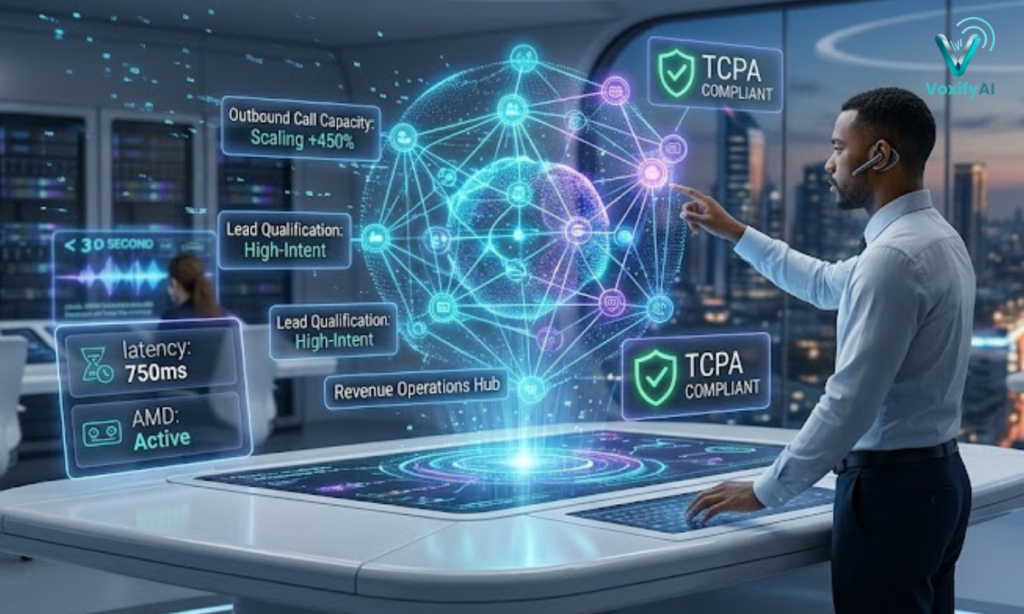
The most advanced conversational brain is useless if your outbound calls are blocked before the phone rings. Telecommunication carriers aggressively flag high-volume automated dialing. To maintain high connect rates, an enterprise voice stack requires advanced telephony features:
- SHAKEN/STIR Level-A Attestation: Every outbound number assigned to your voice agent must hold verified carrier certificates. This guarantees to major telecom networks that your business legally owns the caller identity, maximizing answer rates.
- Local Presence Routing: Outbound dialers should dynamically match the local area code of the prospect being targeted. This strategy historically increases cold call connection rates by up to 40%.
- Millisecond-Level Answering Machine Detection (AMD): The voice agent must distinguish between a human saying “Hello” and an automated voicemail greeting within 500ms. It should drop a hyper-personalized voicemail message or immediately disconnect without wasting billing minutes.
3. Glue Engineering: Deep CRM Data Synchronization
An AI cold caller should never operate in an isolated vacuum. The true ROI of automation lies in its ability to read from and write to your central system of record using robust API webhooks.
At VoxifyAI, we replace manual notes with programmatic data parsing:
- Intelligent Lead Enrichment: Before placing a dial, the orchestration layer (built on n8n or Make.com) pulls firmographic and intent data from your CRM (HubSpot, Salesforce, or GoHighLevel). The agent utilizes this to personalize the opening line, referencing recent trigger events or industry pain points.
- Automated Structured Data Mapping: As the prospect converses, the agent identifies core criteria (e.g., current software stack, operational budget, purchase timeline) and updates individual, structured data fields in the CRM in real time.
- Autonomous Appointment Setting: If the prospect qualifies based on your BANT criteria, the voice agent calls a custom tool function to check your internal calendar availability, proposes real-time slots, and books an appointment directly onto a live closer’s schedule.
4. Bulletproof Compliance: Hard-Gating the Outreach
Compliance is non-negotiable in outbound prospecting. Placing automated phone calls in the United States requires total adherence to regional and federal consumer protection statutes.
An elite voice AI architecture enforces automated compliance gates:
- DNC Registry Scrubbing: The dialing pipeline must automatically cross-reference lists against federal, state, and internal Do Not Call (DNC) registries before executing a single dial string.
- Time-of-Day Restrictions: Hard-coded system logic must prevent the agent from placing calls before 8:00 AM or after 9:00 PM based on the recipient’s local time zone.
- Instant Opt-Out Execution: If a prospect states, “Remove me from your list,” the agent must immediately acknowledge the request, politely end the conversation, flag the number as a suppression record in the CRM, and cease any upselling or pitch logic.
Performance Benchmark Matrix
| Operational Capability | Outdated Robodialers / Basic Bots | Custom Voice AI Stack (VoxifyAI) |
| Response Turnaround Latency | 1.5 to 3.0 seconds (Awkward pauses) | 600ms – 800ms (Fluid, lifelike pacing) |
| Objection & Interruption Handling | Ignores user and reads continuous script | Pauses instantly; addresses user intent |
| Carrier Deliverability Status | Frequently blocked or labeled as spam | Verified SHAKEN/STIR / Clean local identity |
| CRM Data Tracking | None or disorganized text blocks | Immediate, structured data field updates via API |
Frequently Asked Questions (FAQ)
Can an AI voice agent close complex enterprise deals on its own?
We highly recommend utilizing a Hybrid SDR Framework. The AI voice agent serves as an elite outbound Sales Development Representative—handling high-volume data dialing, checking preliminary interest, qualifying leads at scale, and placing high-intent, warm opportunities directly onto the calendars of your experienced human account executives.
Does the AI agent disclose that it is artificial intelligence?
Yes. Building clear AI disclosure into the opener is a legal requirement in multiple states (such as California and Texas) and represents an operational best practice. When executed cleanly—“Hi, I’m an automated assistant for VoxifyAI, calling to check your operational availability…”—prospects appreciate the speed and clarity, leading to highly productive sales conversations.
What happens if the prospect asks a highly complex technical question?
The system utilizes a structured fallback mechanism called Warm-Transfer Routing. If the conversation moves beyond the agent’s preset technical knowledge base, it says: “That requires a deeper technical review. Let me transfer you directly to our lead systems engineer right now.” The call is then routed to a live human, and a full text-transcript is automatically pushed to that human’s workstation screen.
Scale Your Outbound Pipeline with Infinite Capacity
The organizations that win the outbound sales landscape are those that convert speed-to-lead into a structural advantage. By combining low-latency voice engines with custom database integrations, your company can execute high-converting cold-calling strategies with unlimited scale, perfect script consistency, and zero team burnout.
Schedule an Outbound Sales Automation Audit with VoxifyAI and listen to a live, customized voice agent demonstration tailored directly for your industry.